Select Your Region

- Manufacturer: LANXESS
- Product Line: Oxone™ Potassium Monopersulfate
- Product: Oxone™ Potassium Monopersulfate
- Industries: Care Chemicals | Energy | Water Treatment
- Authorized Countries: Canada | United States
Oxone™ PS-16
Fulfilled By ChemPoint
Oxone™ PS-16, also called KPMS or potassium peroxymonosulfate, oxidizes at strength without producing chlorinated byproducts.

Quantity
Documents
Specifications
Molecular weight, triple salt: 614.7
Active oxygen, min: 4.5%
Active oxygen, typical analysis: 4.7%
Active oxygen, theoretical for triple salt: 5.2%
Active component KHSO5, min: 42.8%
Active component KHSO5, typical: 44.7%
pH, 1% solution at 25°C: 2.3
pH, 3% solution at 25°C: 2.0
Solubility, g/100 cc H2O at 20°C: 29.8
Loss on drying at 60°C, max: 0.1%
Stability, % active oxygen loss per month: <0.5
Standard electrode potential, V: +1.85
Heat of decomposition: 251 kJ/kg, 108 Btu/lb
Thermal conductivity, W/m·K: 0.161
Purity: 90.3%
Triple salt formula: 2KHSO5·KHSO4·K2SO4
CAS number: 70693-62-8;
Primary Chemistry:
Potassium monopersulfate, KHSO5
Manufacturer
Product Line
Product
Industries
Authorized Countries
Canada
United States

Overview
Oxone™ PS-16 from LANXESS oxidizes without chlorine. Its active ingredient is potassium peroxymonosulfate (KHSO5). It is present as a component of a triple salt, 2KHSO5·KHSO4·K2SO4, or pentapotassium bis(peroxymonosulfate) bis(sulfate). The oxidizing strength comes from peracid chemistry, since Oxone™ PS-16 is the first neutralization salt of peroxymonosulfuric acid, also known as Caro's acid. The chemistry produces no chlorinated byproducts, and it degrades into potassium and sulfate salts rather than persisting in the waste stream.
A standard electrode potential of 1.85 V carries Oxone™ PS-16 through many room-temperature oxidations, including halide to active halogen, reduced sulfur and nitrogen compounds, cyanide to cyanate, copper metal to cupric ion, and ferrous to ferric ion. It arrives as a white, granular, free-flowing powder that dissolves readily, above 250 g/L at 20°C. In the solid state, it loses less than 0.5% of its relative activity per month under recommended storage conditions. It requires no oxidizer label.
Features & Benefits
- Nonchlorinated oxidizer in white, granular, free-flowing solid form
- Standard electrode potential of 1.85 V, high enough for many room-temperature oxidations
- High water solubility, above 250 g/L at 20°C
- Solid-state stability, with less than 0.5% relative active oxygen loss per month under recommended storage
- Solution stability at the unmodified acidic pH of the product
- Defined particle size distribution, 99 to 100% through a #16 (1180 µm) screen
- Stain removal and brightening at 20°C
- Rapid action that supports short wash and cleaning cycles
- Same or better cleaning at lower use levels than sodium percarbonate
- Odorless, with no masking of added fragrance
- Degrades into potassium and sulfate salts
- Transport hazard Class 8
- No oxidizer label required
- Highly predictable etch rate for production of microelectronics
Problems Solved
Chlorinated oxidizers that are difficult to handle and store
Scale formation and white precipitation caused by calcium hypochlorites and solid-form oxidizers
Oxidizer label required with the use of bleach in formulations
Active oxygen loss during storage of solid peroxygens
Poor stain removal and brightening in cold water washing
Long wash and cleaning cycle times
High use levels required by sodium percarbonate
Chlorine odor in finished cleaning products, and masking of added fragrance
Water spotting and residual staining in machine dishwashing
Logistical risk from oxidizer transport hazard classification
Limited to no control over etching rate in the production of electronics and microelectronics
Pool turns dark or green due to algae bloom
High level of free and combined chlorine in pool and spa applications
Frequent cleaning or replacing paper mill felts
Insufficient bleaching in denture cleansers and cleaning applications
Applications
Laundry detergents
Automatic dishwashing detergents
Unit-dose detergent tablets and pods
Hard surface cleaners
Toilet bowl cleaners
Drain cleaners
Appliance cleaners
Denture cleansers
Pool and spa non-chlorine shock treatment
Printed circuit board microetchant
Repulping aid for wet-strength resin destruction
Odor control agent in wastewater treatment
Cyanide destruction in mining
Related Applications
Related CAS Numbers
Water Treatment
Related Chemistries
Care Chemicals
Related End Markets
Energy
Related Functions
Oxone™ Potassium Monopersulfate Articles
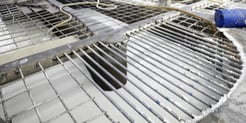
LANXESS Oxone™ in Repulping
Oxone™ monopersulfate compound is a processing aid in repulping internal broke or a secondary fiber furnish.

LANXESS Oxone™ for Pool and Spa
LANXESS Oxone™ keeps pools sparkling clear and free of odors and irritation. Oxone™ has been widely used in swimming pools and spas since the 1970s. Today Oxone™ is the most widely used non-chlorine oxidizer for pools and spas.
ChemPoint Is Here to Help
Are you in the correct region?
We’ve detected that you are located in a different region than the region selected on the website. Would you like to change your region?
Current Region: English - United States